Thursday, August 29, 2013

Blog Post #3: Watch, Wait, and Bake a Cake

I have always been a watcher - eager but withdrawn, involved but reserved. I can talk and laugh, of course, but I am content with being the one on the outside. Sometimes I feel as though I am invisible. People don't see me as they pass me by, but I see them. I hear snippets of their thoughts spilling over for me to remember. They need not worry though; I don't want to memorize their faces. I just want to observe, no strings attached. The chattering of a group of girls as they discuss the latest fashion trends. The cool attitude of guys as they slap each other on the back and boast about their latest sports achievement. The quiet whisperings of a couple near the stairs as they kiss, embrace, and head off to their next class. I take this all in without a word, imagining the stories behind everything I see. I am almost like the scribe in a meeting of kings, patient like the Greeks in the Trojan Horse that I am writing about. In a group, I can use this to analyze a situation and build upon ideas already given. This is why I watch - to evaluate, to elaborate, to understand.

While my eyes are always open, I do not think I'm the audience of this show of life. I am not a person who sits on the sidelines and watches as the world goes by. I am active about taking risks because I know there will not be a second chance. I am a sentinel of opportunity. Similar to little Gretel who manages to push the evil witch into her own oven, I lie in wait for the time I can appear. No, not passive, but one who seizes time. Likewise, when I work in a group, I quietly listen to the discussion, build my own thoughts, and speak up when the moment is right to tie a thesis together or break apart an argument. This is why I can act as a conciliator, both to others and to myself.

So if my life was a story, I wouldn't be the knight in shining armor or the damsel in distress - I would be the narrator telling the tale.1

1 This post is for an AP English assignment.

Wednesday, August 28, 2013

Book Review #3: Shadow and Bone

"The problem with wanting...is that it makes 
us weak." Yes, please. I want a sequel so bad
my heart's going to fail if I don't get one.
"Make me your villain."

God, I have never read a book this good this entire year. It's been a long, long time since I've found one of these, and I will say, all two and a half hours of time that should've been spent on homework and college applications was completely worth it.

Shadow and Bone, by Leigh Bardugo, tells the story of a girl named Alina Starkov. She discovers that she is a Grisha - the magical spellcasters of the world - when saving her childhood friend from the flesh-eating creatures called volcra. These bird-like monsters live in a thin strip of darkness splitting the country, Ravka, called the Shadow Fold. She is taken in by the Darkling, a mysterious and extremely powerful Grisha, to train her rare power of summoning the sunlight, which he plans to use to destroy the Fold once and for all.

I was recommended this book by my best friend, and in the process she spoiled much of what should've been a surprise. Like she said, the beginning of the book was a bit slow - in a good way. It eased you into the vivid world of Ravka and gave you a first perspective at the main characters: Alina, Mal, and of course, the Darkling. But after first few chapters, the book took off, sending me through a whirlwind of crazy amazingness (the best word I could think of) until the warm but chilling end. The pacing was wonderful, the action at the right moments, the timeskips well written. The descriptions inside were also quite lovely, providing intricate mental images of the world Alina lives in.

There were many complaints on other reviews about the inaccuracy of Russian terms in the book. To be honest, I don't really care if Alina's last name is supposed to Starkova instead of Starkov, or if Grisha is like using the word "Greg" in English. Bardugo can do whatever she wants with the dialect of her book because all language is subjective. And besides, it's only based off of Russian culture. Ravka is not Russia.

Now for the main characters. Alina was a refreshing difference from many girl protagonists in teenage supernatural romance novels these days (see Fallen review). She was ordinary, strong-willed, and someone who 1) had a personality and 2) had the guts to use it. You could connect with her, feel her panic when she runs for her life, step into her shoes and see the incredulous displays of the Grisha at the winter fete. The use of first person immersed you even more. The only problem I had with her is that she was quite vain throughout the book.

Mal, in the beginning, came off as boring and flat, where he was simply known as Alina's good childhood friend, the best tracker in Ravka, and somewhat of a player-type. I still remembered the scene where a beautiful Grisha eyes him, and Alina is immediately irritated. Then he disappears for a long time, and I thought he wouldn't come back. But he did, and he turned the tables on me. While I didn't completely connect with him, I became aware of how complex, how real his character was. He was able to realize that Alina was becoming someone she was not - albeit scornfully - yet was still able to forgive her in the end and protect her from well...the Darkling. 

You must've realized I italicized his name every time it has been mentioned so far. You must've then realized how special of a character he is to me. It was unbelievable how much I came to love him. The friend I mentioned earlier had already spoiled it that one of the good characters would turn out to be completely evil; I had expressed to her that that was something I wanted to see in books. Well, she was right - spoiler alert - and she was also right how easily it was to fall in love with him. Sure, he's seductive, handsome, all the things you would expect in a typical bad boy character. Except he isn't. Through the entire first half of the book, he comes off as the nicest, kindest, most misunderstood character in the entire country of Ravka. He has so many rumors floating around him, so much fear among his followers, that nobody really sees who he is. Alina is the first to open up to him, both attracted by his charm and his humanity. And to me, he fit into my category of "most favorite characters" because I tend to like the characters that are dark, that are flawed (yes to all anti-heroes!)

Then it turns out to all be an act.

The Darkling is not the character you thought he'd be. In fact his acting was so convincing that if my friend hadn't told me about him first, I would've never suspected. No, the Darkling is not the wonderful, heart-fluttery character; he's the arrogant, power-hungry, manipulative, heart-fluttery character that's just been seducing Alina so he can control her power. Instead of destroying the Fold, he wants to use her light to destroy his enemies in the Fold so he can control it, because he's the one who made the Fold in the first place. 

Too late, you've already fell in love with him.

But despite his villainy, you also realize that he isn't a one-minded, "I just want to rule the world for no reason" villain. His logic is flawed and horribly, wonderfully human. All he wants is peace, the end of all wars. The only problem with that is that the peace comes with him reigning as a tyrant and under a darkness nobody can fight against. And still you love him.

Enough of me expressing my undying love for the Darkling. This is a must-read, so go pick it up at the bookstore, the library, or even pirate it on your smartphone because you will be swallowed up by one of the best stories ever. Did I also mention it might be turned into a movie soon?

Final Rating: ✐✐

Monday, August 26, 2013

Blog Post #2: AP Test Reflection

You know it's going to be a long week when you take an AP Literature Practice Exam on Monday. On the bright side, it was only the multiple choice section, so I was relieved of the essays. Going into the test, I felt totally unprepared. I had heard of the horror stories of last year's AP Lit students, and I was expecting the worst - specifically vague, confusing questions that wouldn't make sense no matter how much you looked at them. From past experiences I knew that analyzing texts wasn't my greatest strength, so I wasn't expecting myself to do the best either. With this in my head, I dove right in.

To my complete surprise, I didn't do as bad as I thought. In fact, I did a lot better than I thought. Many of the questions I thought I got wrong I actually got right, and as I was reading through the passages, I realized I understood a lot more than I thought I did. One of my strong points I discovered was searching for small details in giant blocks of text. The second passage in the test proved this, as I got many questions right that were right from the text, as long as you took the time to find them. I also found that I dealt with lists of answers quite well, like questions where they gave you several words and asked which were found in the text in what way (a specific one was from the second passage, where it asked what "darkness" was referring to). These types of questions popped up all over the test, so as long as I could identify where each answer choice was or was not in the passage, I could solve the problem asked. Another strength I found was that I could analyze poems better than I thought I could. I always thought of poetry as convoluted and difficult to understand, simply because there were so many ways a poem can be interpreted. But as I checked my answers for the two poems in the test, I found that most of my interpretations were actually correct. I managed to find the symbolism hidden in all the figurative language and confusing syntax.

Of course, after that strenuous hour, I knew there were definitely areas I needed to improve in. One of the biggest things I missed was the poetry form questions. I never studied poetry forms, and several ones on the test I had never heard of at all. Okay, I knew that a ballad usually dealt with love, but what in the world is a lyrics? And what's the difference between a Shakespearean sonnet and a Petrarch sonnet? Fortunately, there were only two questions dealing with forms, so it didn't kill my score. Another area I fell heavily on was the figurative language portion. Yes, I know my individual figurative language devices. I know what a simile is, what a metaphor is, what a personification is. But after taking this test I realized how difficult it was to pinpoint an exact device onto a piece of text. They started blending together and looking so similar I couldn't decide which one was the better answer. One more thing that I stumbled upon was the use of an older version of English in the second poem. It was difficult to understand because I never really studied the language of the time, and I got caught up in the words that we don't use today.

So now it comes down to this - what can I improve in the following months up to the actual AP test? Better yet, what are some goals I can set for myself so I can get that 5?
  1. Study up on poetry forms - This will come with time, I'm sure. I'm quite positive that we're going to be discussing these in class, so when we do, I'll make sure to memorize them so I can be prepared for those easy point questions in May. If I need to, I'll be making flashcards, and until I can recite them off the top of my head, I'll be sure to keep drilling them.
  2. Review figurative language - This is another one that I'm assuming I'll cover in class, especially how to tell them apart besides the dictionary definition. I think that I'll also need a lot of practice in this area by reading different poems and identifying figurative devices as I go. The more application, the better I'll get.
  3. Analyzing texts - While I did do quite well in this area - one of my hidden strengths - I don't think I can depend on my skill right now and go take the AP test. This area I have always been faulty in, either doing super well or doing poorly (I think the best example would be my SAT reading scores). It all comes down to what I am given to analyze, and I don't want that to be the only way I can do well. This includes learning how to read older versions of English like of that in Shakespeare. Therefore, as the days tick down to the AP test, I want to improve this area as much as I can, to the best of my ability. Practice, practice, practice!
The horror stories have been displaced for now, in my head at least. AP Lit has proven itself to be a manageable class - in the first few days of course. Hopefully it stays this way as the trimester continues.1

1 This post is for an AP English assignment.

Sunday, August 25, 2013

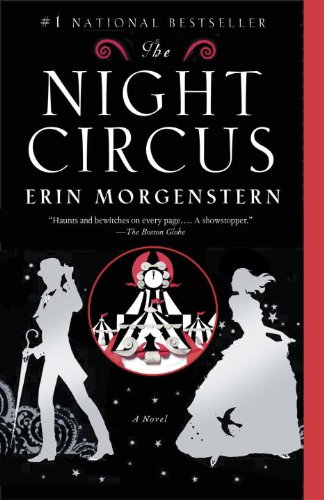
Book Review #2: The Night Circus

A bewitching cover that fits the tale inside.
I fell in love with it at first sight. 
"The circus arrives without warning..."

The Night Circus, by Erin Morgenstern, is a love-it or hate-it book. I finished this book quite a while ago - last year I believe. When I got it, it was a birthday present, but I had heard of it before. So now, several months later, I come back to review it.

The book follows two magicians, Celia and Marco, as they participate in a mysterious competition they were raised for. Only one of them is supposed to get out alive. But what happens when they fall in love?

Celia and Marco aren't the only important characters in the book. There is a whole cast of character to which the story is told from, alternating points of view and time periods. This was one of the points that I didn't like as much. It was difficult to keep track of where you were in the story and what events took place at what time. Morgenstern does make this easier by putting dates at the beginning of the chapters, but it was still confusing at times because time doesn't just go forward, it goes backwards as well. The amount of character points of view was head-spinning as well. I'm used to switching points of view between several characters, as that is what happens in my own book, but The Night Circus truly had me flipping back to figure out what was going on.

However, I will say that the characters in the book are absolutely delightful. All of them were "human" - I say this with much emphasis, as many characters these day lack elements that make them beautifully normal. I loved Poppet and Widget. Bailey was wonderful too, as he gave a perspective from outside of the circus. The only problem I had with the characters was that I found it difficult to connect with them. It may have been because of the constant switching of views, but I never felt that I was standing in their shoes, rather I felt that I was watching from afar.

The description. Where do I get started on the description? It's magical. Morgenstern commands an excellent hand of prose, not terribly purple, but not lacking in the amazing details that give this book its trademark. The first chapter had me captivated - the use of second person took me straight into the strange and wonderful circus, from the delicious treats to the incredible tents. I could literally taste the caramel corn. The Midnight Dinners were a special treat whenever they appeared. And no matter how crazy or outrageous the tents seemed, Morgenstern made them come alive, made them seem real. You can only read the book for yourself if you want to experience it.

I loved the idea of the plot, but I felt like it didn't come out all the way. The competition was mysterious, possibly too mysterious. I thought it was vague and difficult to gather the details. But I expect that it was never supposed to be completely understood anyway, because the main focus was the circus, the magic, and all the characters that came with it. Pace-wise, I did feel like it was a bit slow, but the beautiful descriptions kept you flipping the pages and wanting more. This impacted the romance aspect of the book. I was waiting for Celia and Marco to fall in love, but it came later than I expected. And it wasn't like most romances these days; it wasn't that split second of head-over-heels love. It was slow and intimate. It just happened without you noticing it. While it did drag a bit, I loved how it was different from many of the romance plotlines I have read before.

Despite some of its shortcomings, The Night Circus was one of the best books I had read in a while. It might not be for everyone though, as its plot came slow and had pages of lengthy description that are often not seen today. But if you enjoy an original read, I suggest curling up with this book in a bed. Keep a dim light on, enough to see the words, and let yourself fall into this magical circus and its elegant, glamorous charms.

Final Rating: ✐✐

Saturday, August 24, 2013

PROPAGANDA: The Orb of Tides Synopsis

Five weapons destroyed the world.

Then disappeared without a trace. 

Since the Incident, Mageia, home to people who can control the natural elements, has never been the same. Its once powerful government has been buried under the rubble of unrest. Its people are divided, unable to come together to rebuild the country they used to know. The only way to stay safe is to become the pawn of five powerful noble families in a game they have been playing for centuries.

But the Incident has also drawn out people that hold the answers to the story. A forest girl searching for her lost father. An unwanted noble born with the wrong element. An orphan determined to bring back her brother. Brought together by a common goal and the tricks of fate, they journey through the ravaged country, taking with them people from their pasts and futures, as they begin to uncover the greater forces working behind it all.

The question is, are they really discovering the truths? Or is it the lies they need to know?

Friday, August 23, 2013

Book Review #1: Fallen

They say you can't judge a book by it's
cover. They never said which one was 
better.
I started this book a few days ago, mainly because I kept seeing it displayed in my school library. Truthfully, I tend to avoid books such as these, as there have been one too many of them lately - more specifically, the human girl falls in love with a supernatural boy but takes a whole series to finally be together. Sounding familiar already?

Unfortunately, Fallen, by Lauren Kate, follows the same guidelines. The main protagonist, whose point of view the story is told from, is a girl named Lucinda Price, or Luce for short. She is entering the reform school Sword and Cross for accidental reasons involving a fire, a kiss, and a dead boy. Of course, "reform" school is this situation means a church converted prison with red security cameras, black on black clothes, one phone call a week, and a gigantic swimming pool behind an altar. And what better place to find your soul mate than behind the barbed wire fence of this school?

Luce proceeds to meet several people, two of which begin to vie for her attention: Cam, a black-haired perfection with intense green eyes described at least a hundred times through the pages, and Daniel, an equally flawless contender that Luce is automatically drawn to - despite the fact that he flicks her off in their first encounter. And thus begins the wonderful, over-used, difficult-to-pull-off-well plot device known as a love triangle. 

Something girl protagonists in these teenage supernatural romance novels desperately need is a personality. Luce has one. Kind of. 99.999% of her "personality" is drowned out by her innate attraction towards Daniel, so in the end the argument can be made that she has no personality at all. What's the word called? Right. Lovesick. As for her star-crossed lover, much of the book is spent on her endless attraction to him that I didn't even figure out why. Or why he was worth it. Was it only because he was hot?

The other characters display more or less dynamism than Luce. Arriane, Luce's friend, is fanatical and rebellious. She was a pleasure to read about. Molly plays the school bully. Gabbe reminds me of a queen bee without an important role - other than to make Luce jealous. Penn, on the other hand, was well worth it. She is independent but still a dedicated friend. She was realistic; her character stood strong around the others. Too bad she met a totally unnecessary end.

And this brings me to my disappointment that Fallen has clearly "fallen" to another teenage supernatural romance cliche. Daniel and Luce were meant to be together. It was set from the get-go, the very moment Luce set foot into the school, even the first few pages of the prologue. It was obvious. Never have I ever wanted more for someone else, someone unexpected, to take the spotlight in the girl's heart. In Fallen, I looked towards Cam. Cam, oh Cam - how I actually enjoyed your character. You were interesting. You connected. You had more personality than fifty Daniel's put together, and that's probably an understatement. Except some moments of creepiness that still had more personality than Daniel. Then again, I may be biased because I have a tendency to like and root for characters like Cam. And interestingly enough, 1) these characters almost always end up being evil to make the main guy look better and 2) these character almost always never end up with the girl, no matter how much better they are than the main guy, and as I read somewhere, are simply there for the so-called but non-existent love triangle. I never said my luck was good.

Fallen's pace was slow. With how it started, it shouldn't have been slow. But three-fourths of the book was spent on Luce stalking and staring Daniel, while the rest, the important plot points that clear up the mess, was piled on in at the end. So there are shadows. Why are there shadows? Why couldn't they find out anything from the last few chapters in the previous hundred or so pages? It felt like a bomb was dropped, characters exploded into pieces, and the book ended. What now?

I did enjoyed some moments of description - the dreary grounds of the school cemetery, the lovely horizons of a nearby lake, the dingy atmosphere of the bar. The one good thing was the descriptions weren't dragging like some of the classics I've read before, making it easier to move ahead. But great writing? Not really.

Besides the obvious plotfalls into the depths of teenage romance, Fallen has impressed upon me a little more than other books of similar genre. There are definitely worse alternatives out there. It is a quick read, if you have the nerve to stomach such things, or if you just need some descriptions of how hot Daniel is to occupy an hour or two. This book had a lot of potential, but it was ruined by the time it should've gotten mind-hookingly interesting. It was predictable in the end, or maybe even in the beginning, but if you get into these sort of things, then you'll enjoy it. And I guarantee that even if you don't, you'll live. I did.

Final Rating: ✐✐

Thursday, August 22, 2013

PROPAGANDA: The Orb of Tides Food Descriptions

       She clapped once, a stinging sort of noise - almost a slap. At the sound the entrance doors creaked open and large plates stacked high with food drifted in. There were bowls of fresh garden salads, dishes of mince and cottage pie, and trays of golden-brushed pasties. Fluffy mashed potatoes swirled to a point were joined by a pitcher of gravy. A platter of sausages was still sizzling behind the crisp-skinned batter puddings. Wooden boards of freshly sliced bread landed without a sound, the inside of the bread still full of steam and melted butter. There were at least five types of stew, seven more of soups. Lamb chops, pork chops, and steak sat side by side with clams, mussels, fish, and lobsters. Finally, the last dish that floated to the table, replacing the vase of flowers, was a huge centerpiece of roasted swan...
       
       ...

       Again the doors creaked open and pristine dishes floated through. The remains of their meal lifted from the white tablecloth and were replaced by glistening syrup and cloud-like icing. The array was fantastic: multi-layered trifles, plum puddings, sweet pumpkin pie, honeyed tarts, and buns filled with golden custard. There were platters of fresh fruit - lelot melons and plump blackberries - and rum-soaked tortes. Cakes coated heavy with cocoa powder that Aquarius could taste it on the tip of her tongue just by smelling the rich, bittersweet scents. A fountain of smooth, melted chocolate. Even Dan couldn’t hold back a gasp when a well-dressed black forest cake landed on the table, every swirl of chocolate buttercream like the lace edges on a fancy gown.

- from Chapter 22

Wednesday, August 21, 2013

Blog Post #1: Layout Choices

I've been a long-time blog explorer and the co-creator of a community website, After the Rain, in the past few years, so I've had some experience already with how decorating a site works. I knew I wanted the title to stand out. It had to be bold, but not be ornate and hard to read. For this reason I chose "Impact" as the font and made the size 130 px. I also researched a bit of CSS to make the title stand in the center for balance and appeal. Since the title was so big and straight, I knew I had to make the subtitle smaller and more stylized, so I changed it to "Calligraffitti" by changing the site's HTML code using online resources. I knew for sure I would stick to "Arial" when it came to the actual post contents because the font is easy to read and a good font when it's at a small size. For the other headings, I experimented with different fonts until they had the right feel, in which I will explain below.

I wanted this blog to be chic, modern, and professional. It had to simple but still have flair. That's where the color choices came in. The patterned background I found as I searched up "Gray Matte Background", because I knew matte's texture would provide the feel I wanted. The gray of the main background doesn't have a pattern to contrast with the outer background and also to prevent readers' eyes from getting disoriented. I chose to keep it dark because white would stand out too much on the matte background and be too bright. Therefore, the content font color is a light gray to make it easy to read, blend with the theme, and not stick out too much on the page. Everything had to be subdued - except for one thing. To create the flair, the pop I wanted, I decided on a rosy pink for all the accents of the blog. It goes well with the gray and doesn't make the theme feel cold compared to choices like blue or purple. Pink also gave the blog a touch of cute flair to the theme.1


1 This post is for an AP English assignment.

PROPAGANDA: The Orb of Tides Intro

       This is not my story to tell. 
       But neither is it a story I deserve. 
       Because my hands are tainted with the blood of those that should not have died, because my heart only contains memories of those I once loved. And even if I stand in the light, I am not good. I am not a hero
       Yet in this world, how could I possibly be one? In a world created by lies and vengeance, secrets that people keep “for the greater good”, how could anybody be one? This world is not good. There are no heroes.
       This is a world where lives are traded like coins, where last words spoken are not ones of love, where one person’s legacy threw cities into flame - where black is white and good is bad and where thrones are lined with chains and prisons are filled with keys. Only words tell of countries built by peace and virtue. But that is not here. At least, not before.
       Now you ask me, what world is like this.
       And I say, what world isn’t?


Welcome!


This will be the home of writing and things to do with writing. Contrary to the title of this blog, there will be no graphite on it. But there will be ink pixels. Lots of them. 

But for now, this will also be the home of my writing portfolio for my AP English Literature and Composition class until further notice. Hopefully, I will keep this blog running far into the future after the class is over, so expect to see updates as time goes on. 

My name is Sunny. 

And welcome to Pencil.